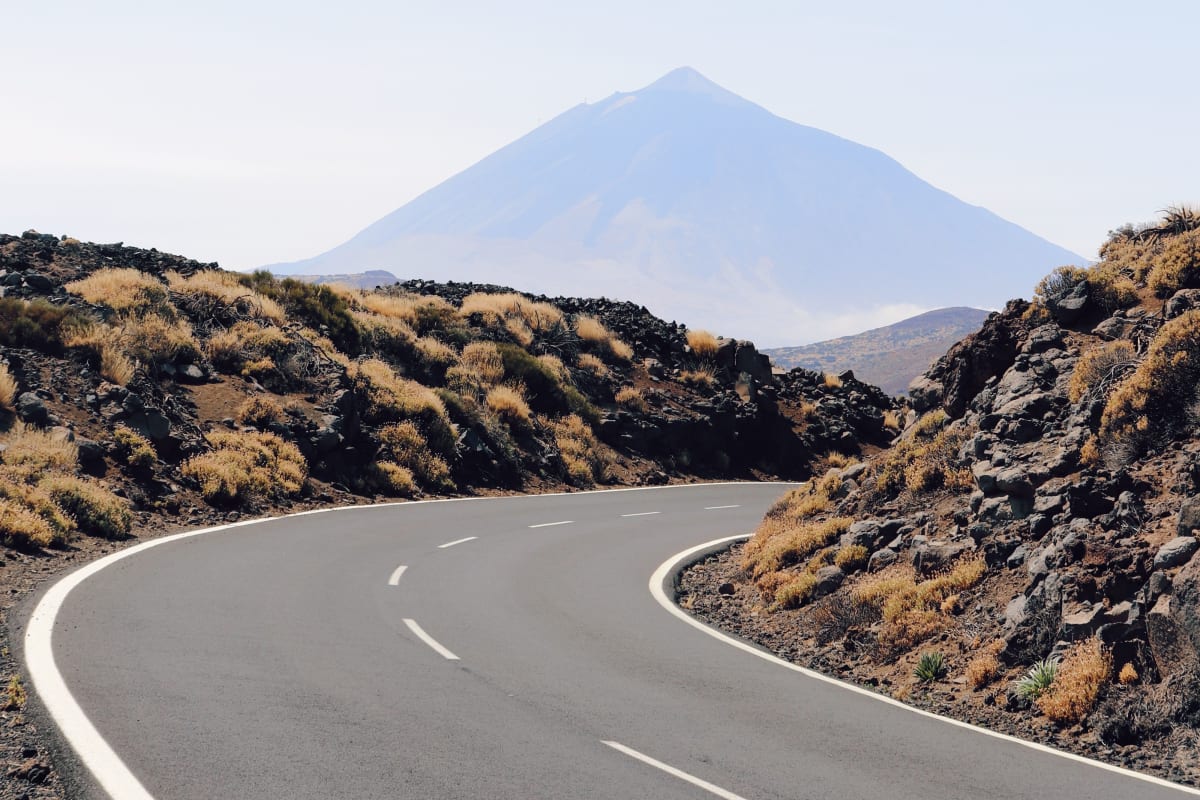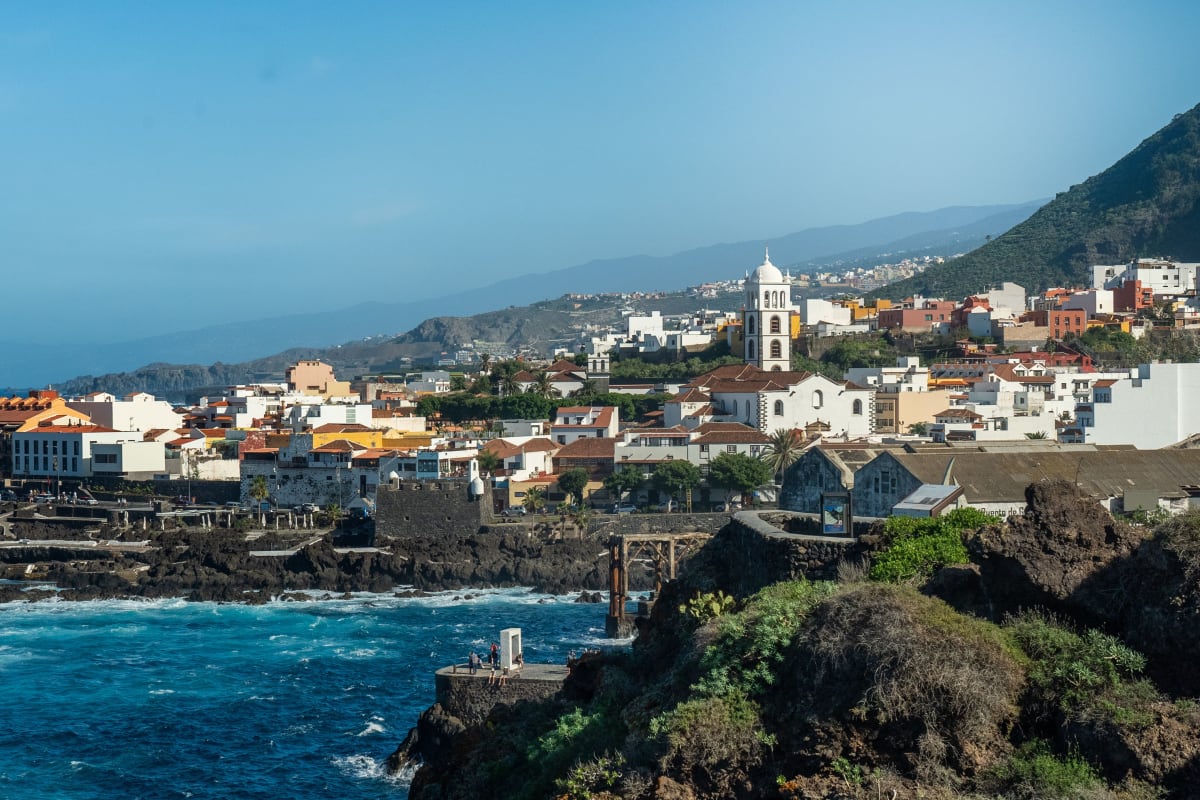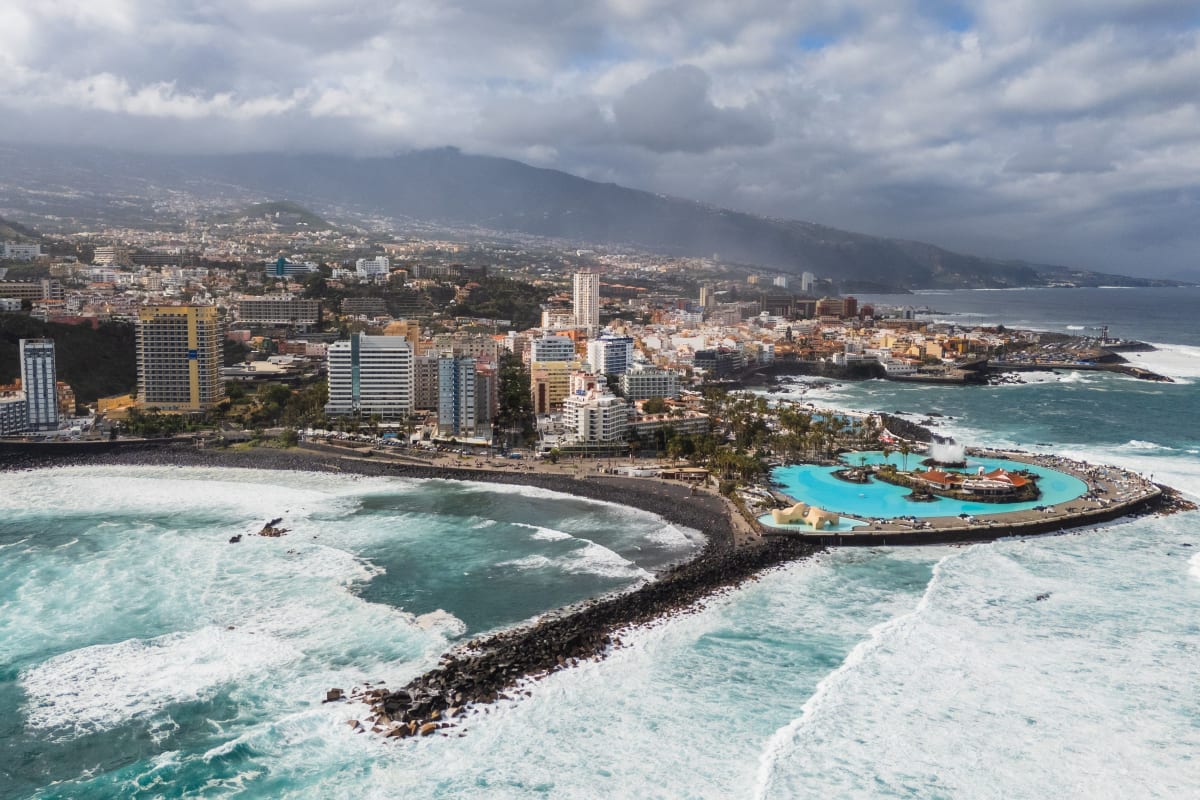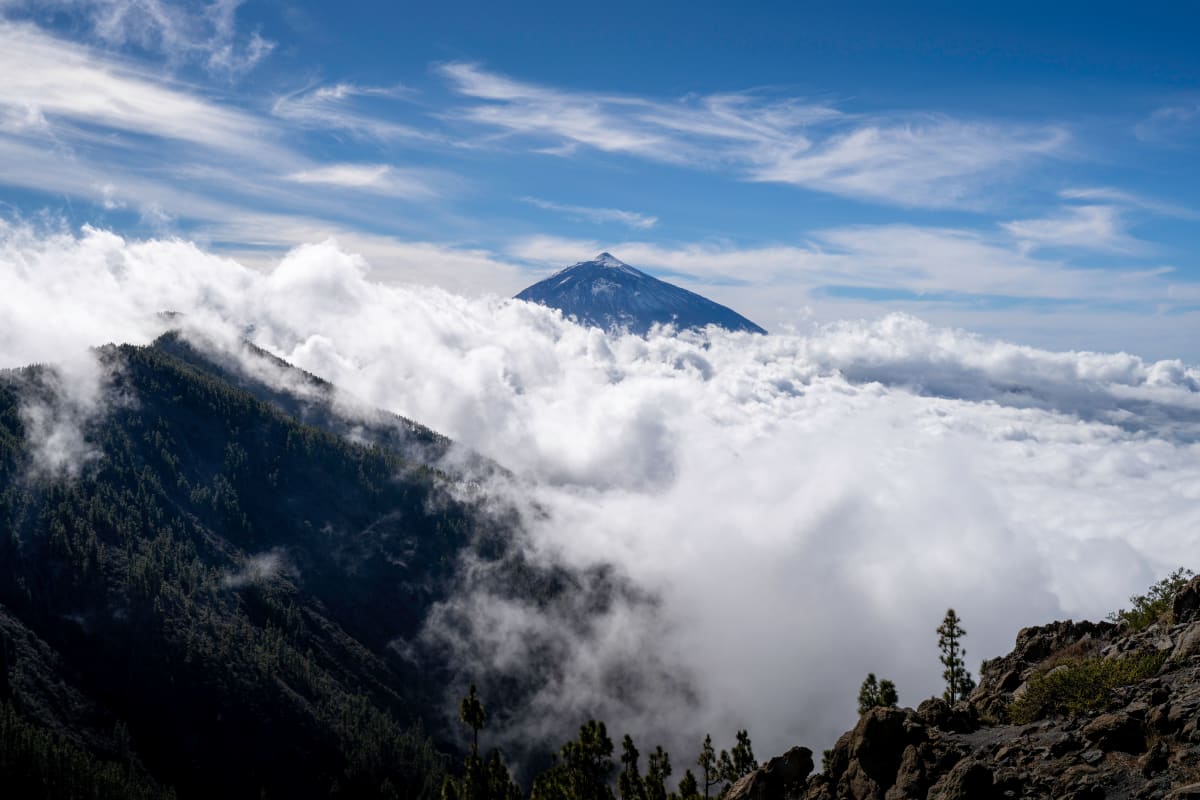
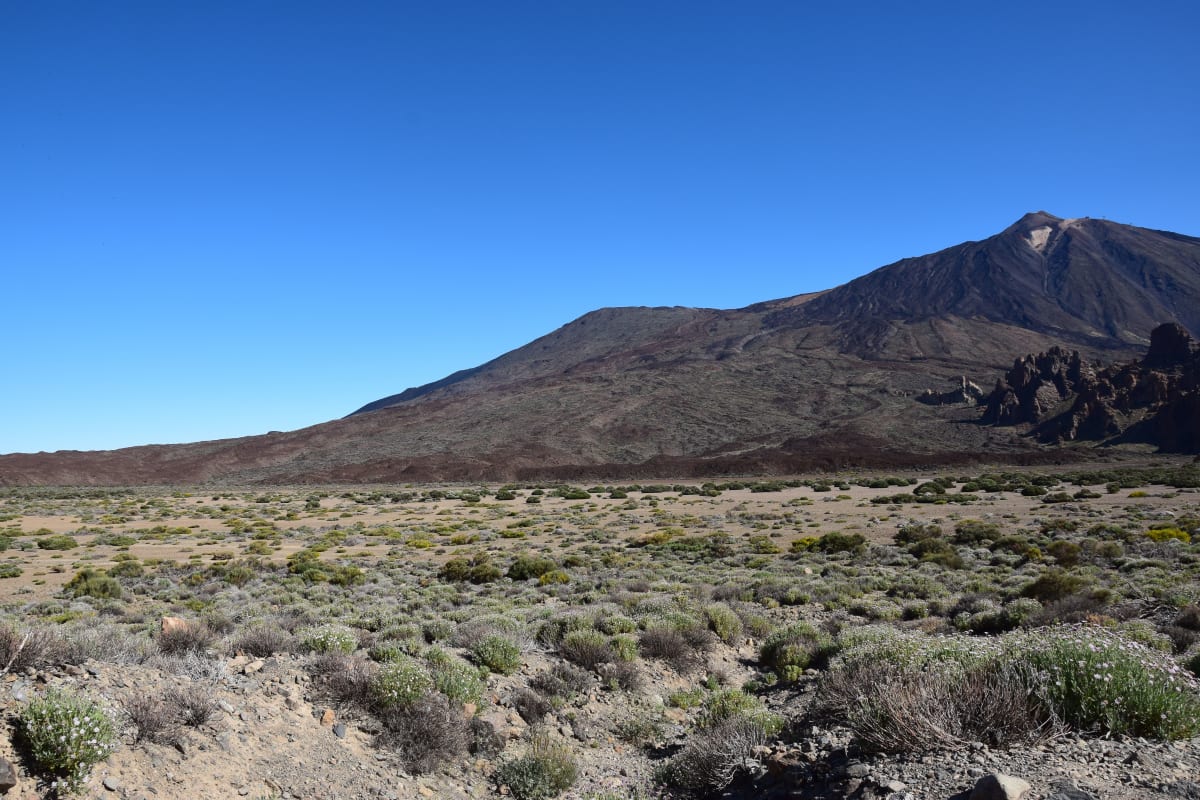
Teide is the reason Tenerife looks the way it does. At 3,715 metres it is the highest point in Spain and the third largest volcano on Earth measured from its base on the sea floor, and the whole island is the mountain's skirt. Everything else here, the banana terraces in the north, the resort strip in the south, the pine belt in between, sits on ground the volcano made.
Most visitors see it as a silhouette from a sun lounger. Going up is a different island: a caldera sixteen kilometres across, lava fields with almost nothing growing on them, and air thin enough that the walk from the car park leaves you breathing hard. It is a two-hour round trip from the southern resorts and it is the single best day out on Tenerife.
The permit is the thing to arrange first
There are two separate things people mean by "climbing Teide", and only one of them needs paperwork.
Going up to the cable car station at 3,555 metres needs nothing. You buy a cable car ticket, ride up in eight minutes, and walk the marked trails that run along the rim from the top station. Those trails give you the crater, the neighbouring islands on a clear day, and the sensation of standing on a volcano.
Standing on the actual summit, the last 163 metres above the cable car, needs a free permit from the national park authority. Numbers are capped at 200 people a day and slots go months ahead in the high season. The permit is checked by a warden at the foot of the Telesforo Bravo path, and without it you are turned back at the barrier, ticket or no ticket.
Book it before you book anything else about the day. Everything on the mountain works around whether you have that slot.
The cable car, and when it is not running
The Teleférico runs from a base station at 2,356 metres, on the road that crosses the caldera. It is not cheap and it is worth it: the alternative is a five-hour ascent on foot from the same point.
It closes in high wind, which happens more than the brochures suggest, and the decision is made on the morning. Check before driving up. On a closure day the crater floor is still worth the trip, so it is not a wasted journey, but you will not be going high.
Book a time slot online rather than joining the queue. In winter, when Europe sends its walkers here because everywhere else is under snow, the walk-up queue can be over an hour.
Altitude is real at this height
The base station is already higher than anywhere in Britain. The top station is higher than any point in the Alps you can reach without effort.
The effects are mild for most people and not for all: headache, breathlessness on gentle slopes, a heart rate that will not settle. The park recommends against the cable car for anyone with a heart or lung condition, and that recommendation is worth taking seriously rather than reading as legal cover.
Practical things that help: drink more water than you think you need, do not go up on the morning of a flight, and give yourself the day rather than treating it as a stop.
Dress for a mountain, not for the coast
This is where visitors get caught out. You leave a beach at twenty-four degrees, drive for ninety minutes, and step out into a wind at four degrees with snow on the ground.
In winter the crater floor sits below freezing overnight and the road closes for ice several times a season. In summer the crater is hot at midday and cold the moment the sun drops. The sun at that altitude burns through cloud and through a hat brim; the reflection off pale lava does the rest.
Take a fleece and a windproof layer whatever the coast is doing, and put sunscreen on the underside of your chin.
Tours and Things to Do in Tenerife
Whale watching, Teide, boat trips, walking tours and day trips across the island and out to La Gomera, via GetYourGuide.
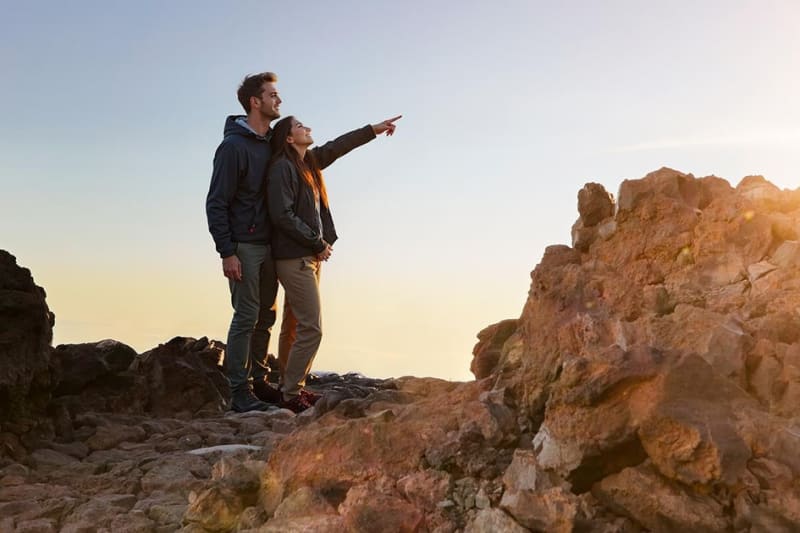
Teide at sunset and after dark, with the cable car
The cable car late in the day, sunset from above the cloud, then one of Europe's darkest skies.
Check availability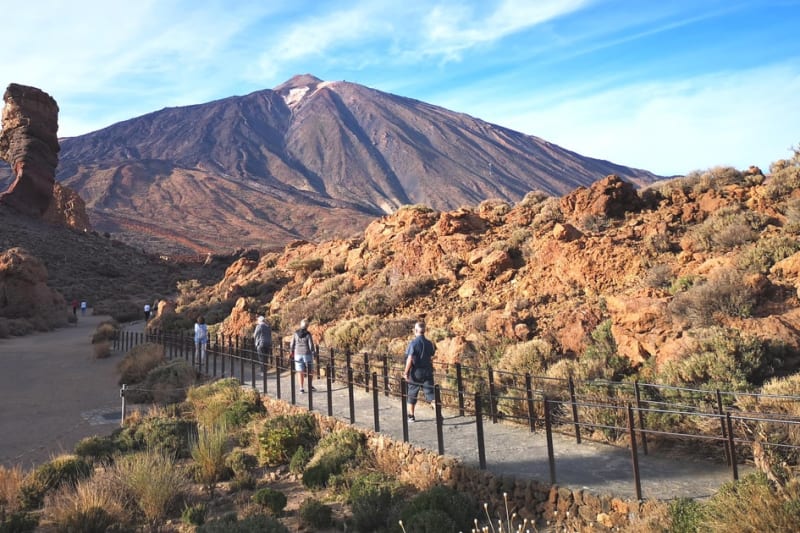
Teide National Park from the southern resorts
The crater and the Roques de Garcia by minivan, with collection from the southern resorts.
Check availability
Teide National Park by guided buggy
Drive your own buggy up through the pine belt into the crater, in a guided convoy rather than alone.
Check availabilityDriving up, and the fuel that is not there
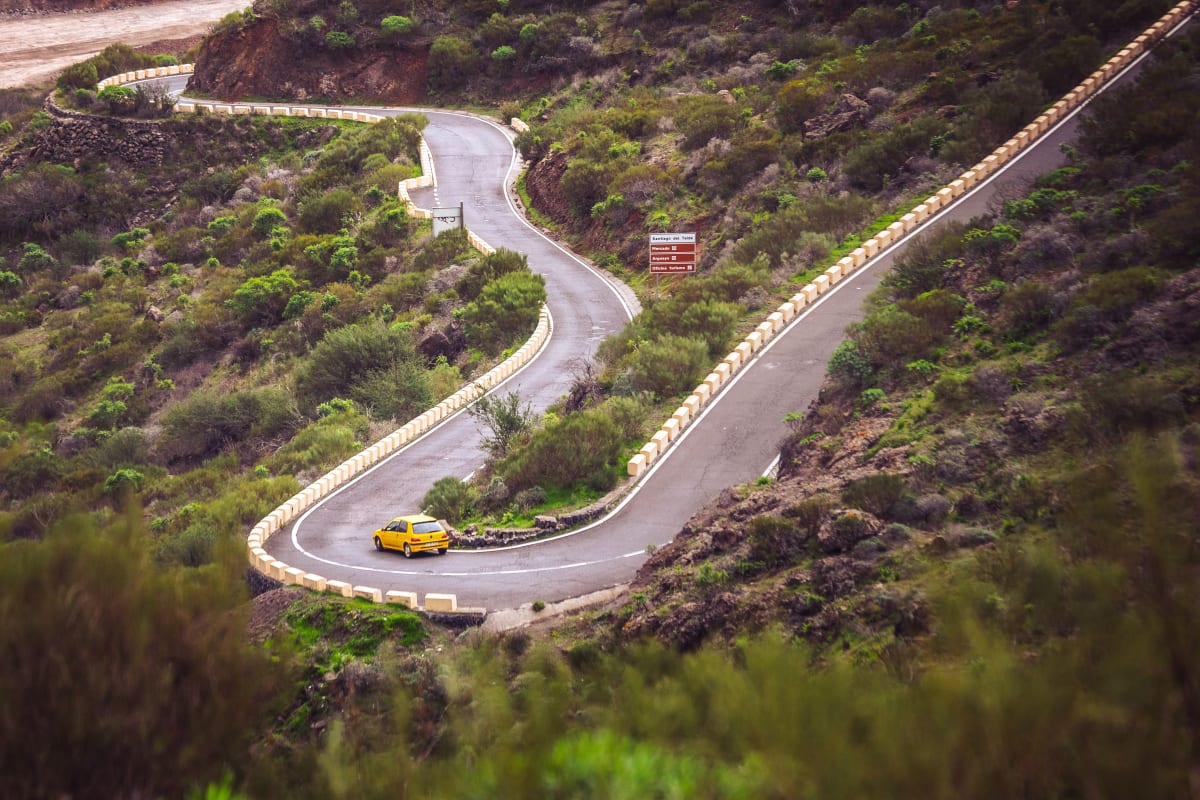
Four roads climb to the caldera: from La Orotava in the north, from Vilaflor in the south, from La Laguna, and from Chio in the west. All are good tarmac and all are slow, with a great many bends.
The southern approach through Vilaflor is the one most people take from the resorts. It climbs through the pine forest, and Vilaflor itself, at roughly 1,400 metres the highest village on the island, is a reasonable coffee stop.
Fill the tank before you start. There are no petrol stations inside the park and the nearest ones are a long way back down.
What to see once you are up there
The Roques de García are the rock formations everybody photographs, on the crater floor near the Parador. There is a marked circular walk of about ninety minutes that drops below them and comes back, and it is the best short walk in the park.
The Parador is the only hotel inside the national park, and its restaurant is the only reliable food. Everything else is a picnic you brought with you.
The night sky is the other reason to come. The park sits above most of the island's cloud and light, and the observatory at Izaña is here because of it. Several operators run evening trips that put sunset from the cable car and stargazing afterwards into one outing, which is the efficient way to do both.
What the Guanches called it
The island's pre-conquest inhabitants, the Guanches, called the mountain Echeyde, and the name meant something closer to hell than to a landmark. In their account Guayota, a malign spirit, lived inside it and had imprisoned the sun god Magec there, and the eruptions were Guayota escaping. The peak was avoided rather than climbed.
That is not decoration. It tells you the volcano was active within cultural memory, which the geology confirms: the last eruption on Tenerife was at Chinyero in 1909, on the north-western flank, and the island is monitored continuously. Teide is dormant, not extinct.
The Guanche presence is thin on the ground today because the Castilian conquest finished in 1496 and was thorough, but it survives in place names all over the island, in the whistled language on La Gomera, and in the mummies in the archaeology museum in Santa Cruz. Anyone spending a day on the mountain gets more out of it knowing that people lived below it for a thousand years and considered it the worst place on the island.
The night sky, and why it is protected
The skies above Teide are among the clearest in the northern hemisphere, and they are protected by law. The Canary Islands Sky Law, passed in 1988, restricts lighting, air traffic and radio interference across the island to keep the observatory at Izaña usable, which makes Tenerife one of the very few places where astronomy is a legal constraint on ordinary development.
The practical result for a visitor is a sky most Europeans have never seen. The park sits above the cloud layer and above almost all the island's light, and on a moonless night the Milky Way is bright enough to cast a faint shadow.
Doing it independently means driving up in the dark on mountain roads and finding somewhere to stop, which is legal and colder than you expect. The organised alternative pairs the cable car at sunset with telescopes afterwards and hands the driving to somebody else, which for most people is the better trade.
Either way, check the moon. A full moon washes out everything and the difference between that and a new moon is the difference between a good night and a great one.
Getting there without a car
Two TITSA buses reach the park, and only two. The 342 runs up from the southern resorts and the 348 from Puerto de la Cruz in the north, each once a day in each direction.
They work, and they are cheap, but the timetable defines the day: you arrive mid-morning and leave mid-afternoon, which is enough for the cable car and one short walk and nothing else. Missing the return bus means an expensive taxi from the middle of a national park.
For anyone without a car, an organised trip is usually the better answer. It costs more than the bus and it removes the timetable, and on the sunset and stargazing trips it covers the part of the day the buses cannot reach at all.
When to go
Weekday mornings, early. Coach parties from the resorts arrive from about eleven and the Roques car park fills.
Winter gives the clearest air and the best chance of seeing La Palma, La Gomera and El Hierro from the top. It also gives ice, closures and short days. Spring and autumn are the compromise most people should take.
Whatever the season, look at the webcam and the park's own closure notices the night before. The mountain does not care about your booking.