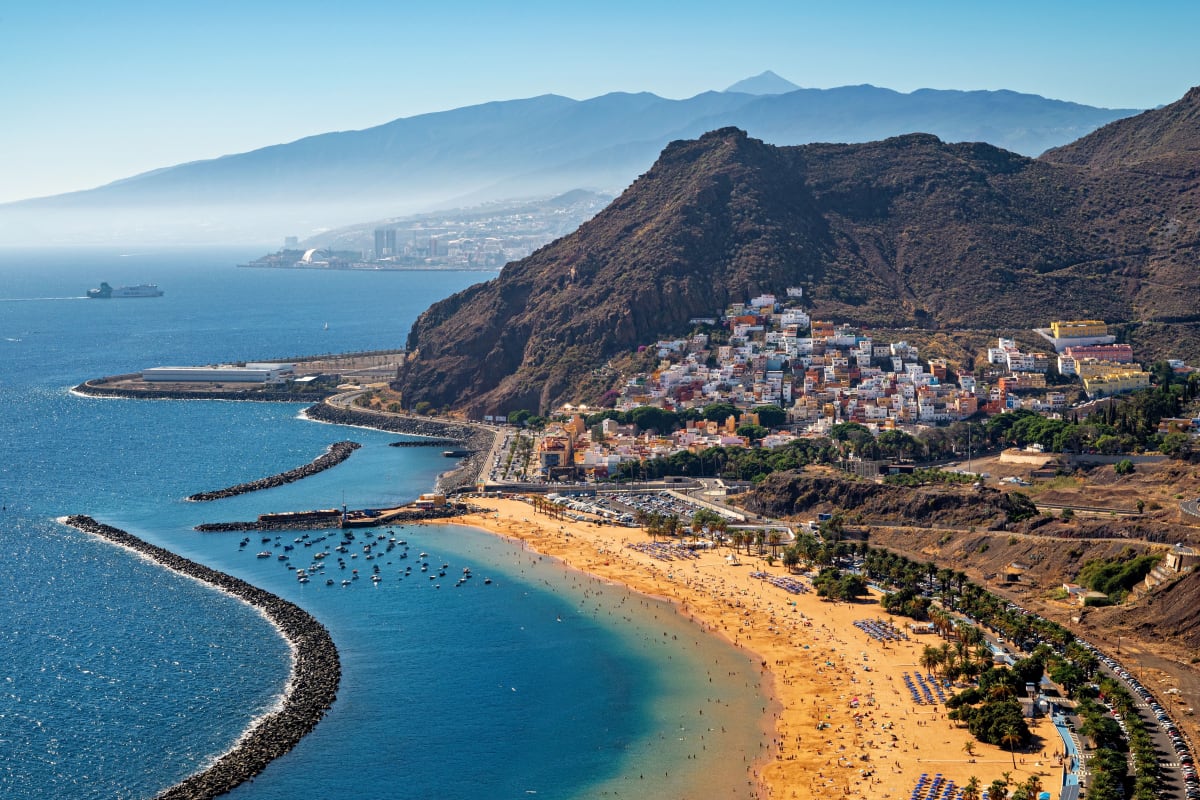
Tenerife is about eighty kilometres long and fifty across, which sounds small until you drive it. The middle of the island is a mountain three and a half kilometres high, so almost no journey is a straight line, and a distance that looks like forty minutes on a map is often ninety.
That geography is the whole transport question. Staying in the south and never leaving it needs no vehicle at all. Seeing the island needs a plan.
Which airport you land at matters
There are two, and they are an hour apart.
Tenerife South (TFS) takes almost all the international charter and low-cost traffic. It is twenty minutes from Playa de las Américas and Costa Adeje, and around fifteen from Los Cristianos.
Tenerife North (TFN), above La Laguna, handles inter-island flights and mainland Spanish routes. It is close to Santa Cruz and Puerto de la Cruz and a long way from the southern resorts.
Check which one your flight uses before booking a transfer or a hire car. Arriving at the wrong one with a booking at the other is a common and expensive mistake.
The case for a hire car
Rental on Tenerife is cheap by European standards and the local companies are cheaper than the international ones without being worse.
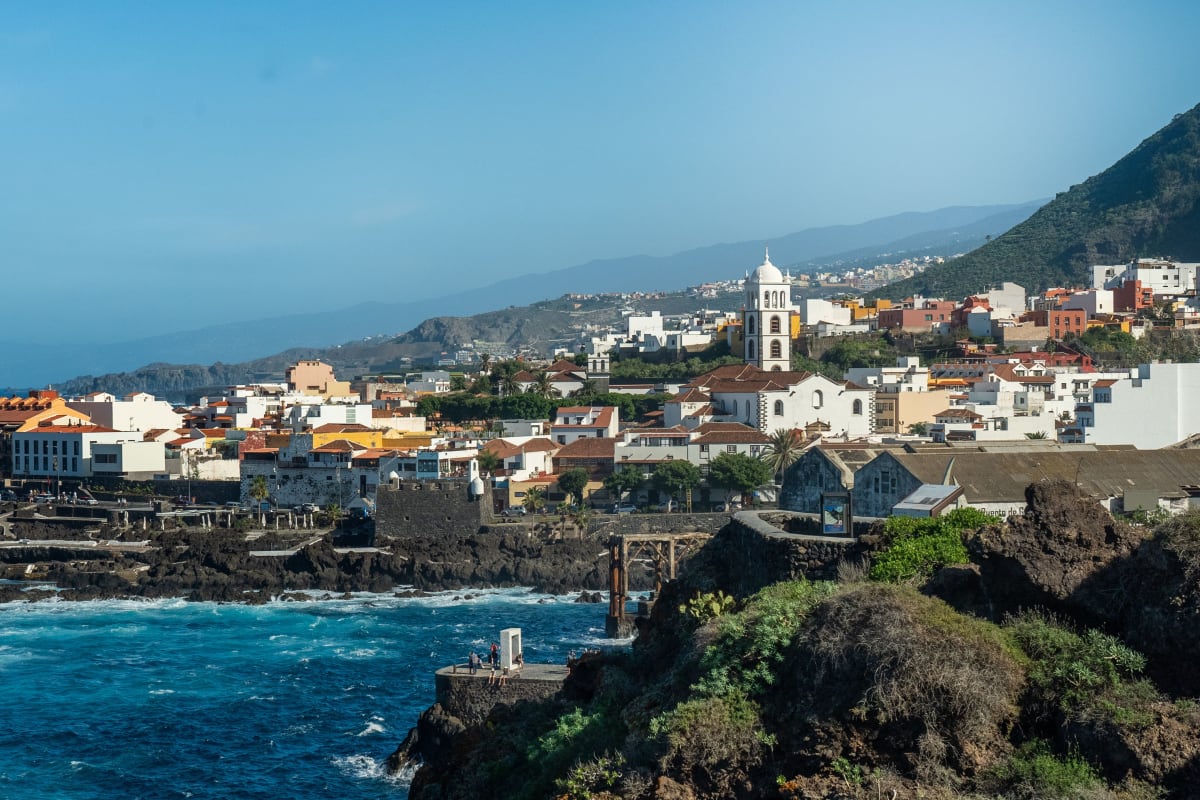
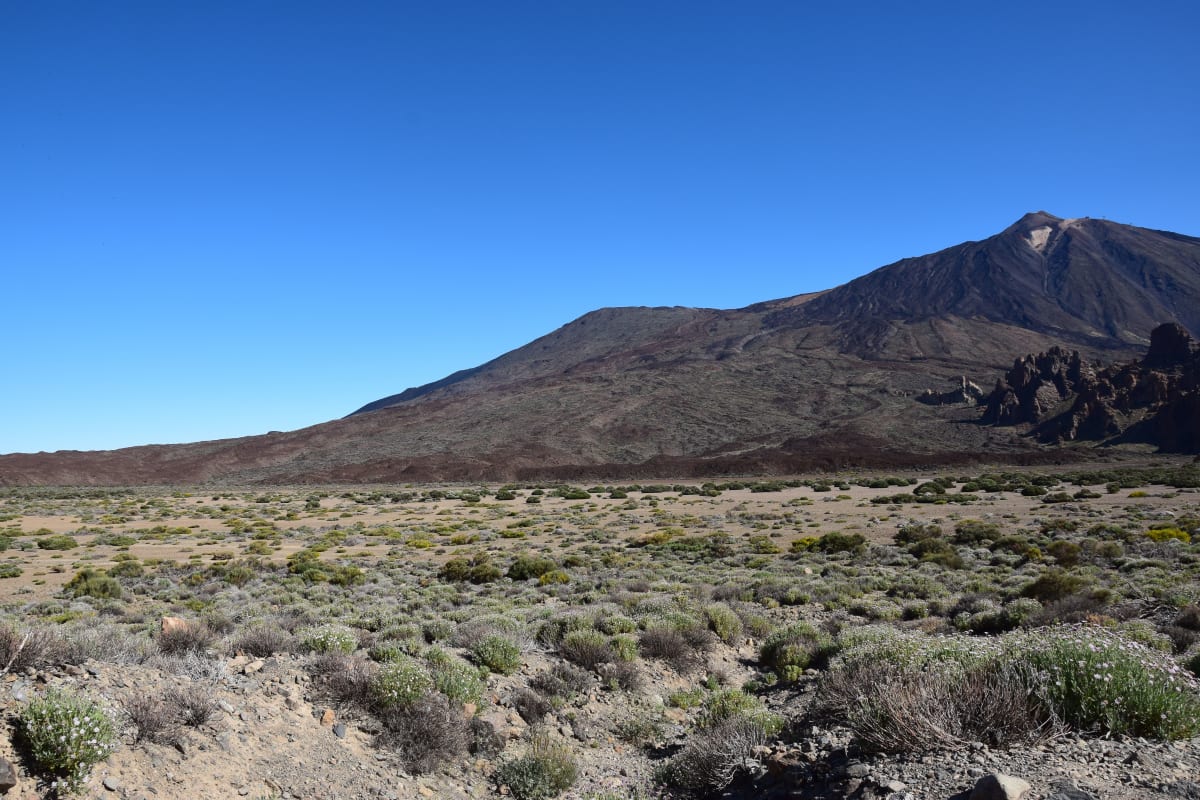
A car turns the island into one destination instead of a resort with excursions attached. The north, the Anaga hills, Teide at dawn, Garachico, the guachinches in the northern valleys: none of it works properly on public transport, and all of it is the reason to come to this island rather than another one.
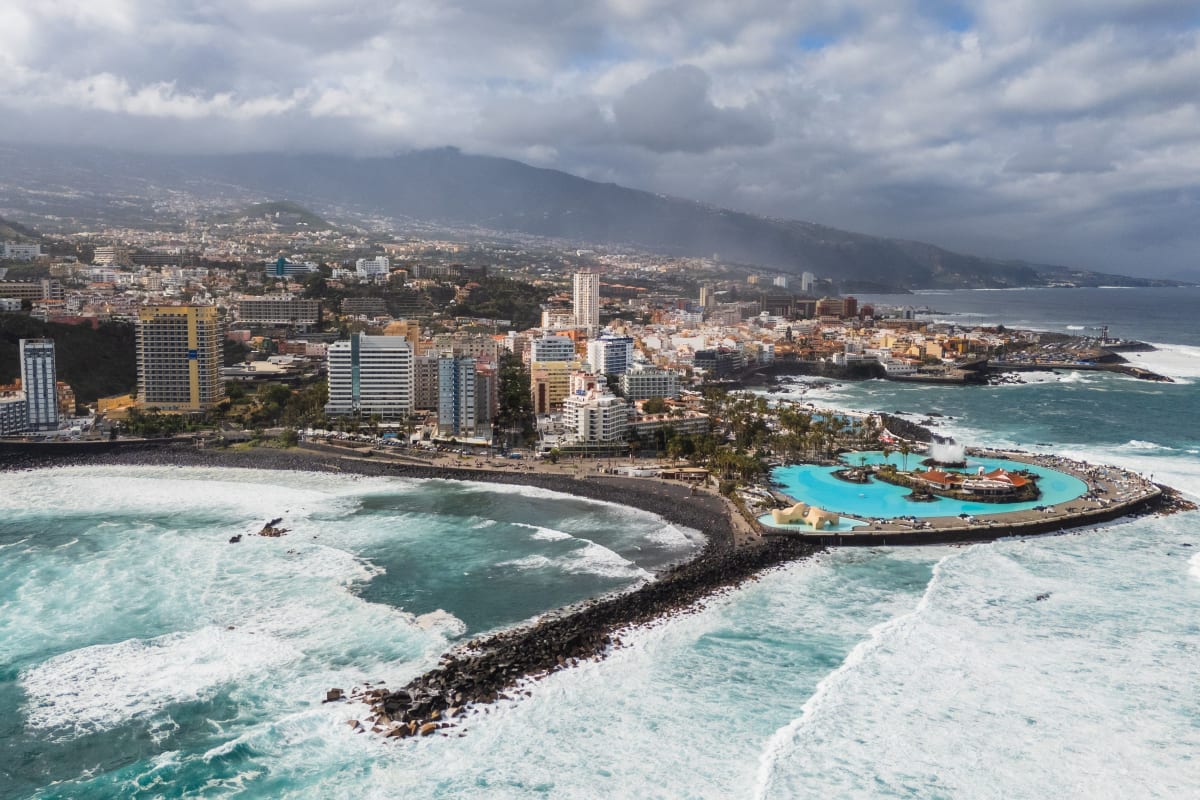
The catch is parking. The old towns were built before cars, and Puerto de la Cruz, La Laguna and La Orotava are genuinely difficult on a weekend. Underground car parks exist in all of them and using one is cheaper than the alternative.
Fuel is roughly half the mainland Spanish price because of the Canary Islands' tax status, which takes the sting out of the distances.
Tours and Things to Do in Tenerife
Whale watching, Teide, boat trips, walking tours and day trips across the island and out to La Gomera, via GetYourGuide.
The bus network is better than people expect
TITSA runs the island's buses, called guaguas locally, and the network is extensive, punctual and very cheap.
The 111 and 110 run between the southern resorts and Santa Cruz, the 110 as a direct express. The 343 links both airports with the southern resorts. Puerto de la Cruz connects to Santa Cruz frequently and to La Orotava constantly.
Buy a ten card, the rechargeable travel card, at any station or kiosk. It roughly halves the fare and works on the tram in the capital too.
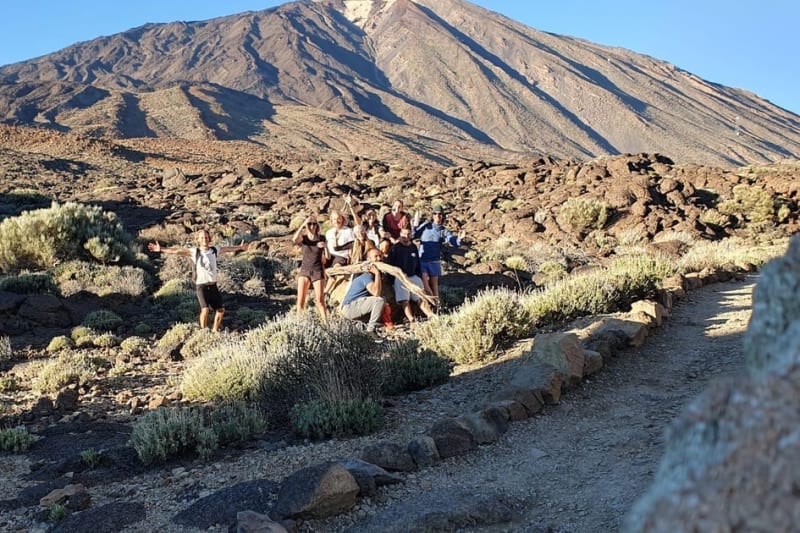
What the network does not do is the interesting corners. Teide is served by two buses a day. Masca, Anaga and the smaller northern villages are hourly at best and sometimes worse. A day trip built on those timetables spends most of itself waiting.
The tram, in the capital only
A single tram line runs between Santa Cruz and La Laguna, with a branch. It is fast, frequent and the best way to do those two towns in one day: park in one, tram to the other, walk, come back.
It is the only rail transport on the island and it does not go anywhere else.
Taxis and transfers
Taxis are metered, regulated and reasonable for short hops within a resort. They become expensive quickly over distance: the southern resorts to Santa Cruz is a serious fare.
For airport arrivals a pre-booked transfer is usually cheaper than a taxi and always cheaper than a taxi at three in the morning. It also removes the queue, which at Tenerife South after a bank of northern European arrivals is a real queue.
For a group of four or more, a private transfer costs about what four bus tickets plus a taxi at the far end would, and takes an hour less.
Hiring a car without the usual traps
Three things separate a cheap rental from an expensive one, and none of them is the headline price.
The fuel policy. Full-to-full is what you want: you collect a full tank and return it full. Full-to-empty means paying the company's price for a tank and returning it as empty as you dare, which nobody manages. The local Canarian firms almost all use full-to-full, and it is one of the reasons to prefer them.
The excess. The standard insurance leaves a deductible of several hundred euros. The desk will sell you a waiver at a daily rate that quickly exceeds the rental itself; a separate annual excess policy bought before you travel costs a fraction of it. Some local firms include the waiver in the headline price, which is worth checking rather than assuming.
The second driver. Often free with the local companies and charged daily by the international ones. On mountain roads over a week, sharing the driving is worth having.
Licences from the United Kingdom, the European Union and most other countries are accepted directly. Bring the card and the credit card in the same name as the booking, because the deposit hold is placed on it.
Ferries to the other islands
Two operators run fast ferries out of Los Cristianos, and the islands they reach are close enough to be day trips.
La Gomera is fifty minutes away and is the one most people do. Its centre is Garajonay National Park, a laurel forest on the UNESCO list, and the island is small enough to circuit in a day with a guide.
La Palma is a longer crossing at around two and a half hours, green, steep and much less visited.
El Hierro is the furthest and the quietest, and is really an overnight rather than a day.
Taking a hire car across is possible and expensive, and most rental agreements forbid it, so read the contract before assuming. The guided day trips exist because they solve exactly that problem: ferry, transport at the far end and a guide, in one booking.
Parking, which is the real problem
The resorts are fine. Everywhere worth visiting is not.
Puerto de la Cruz and La Orotava have narrow streets laid out centuries before cars, and on a weekend the street parking is gone by mid-morning. Both have underground car parks and using one costs a few euros for the day.
La Laguna is worse, because it is a working university town with a preserved centre. Park at the edge and walk in, or take the tram from Santa Cruz and do not drive there at all.
Teide National Park has free car parks at the cable car and at the Roques de García, and both fill from about eleven. Parking on the verge is prohibited and enforced.
Two rules worth knowing. A yellow line at the kerb means no parking at all. Blue lines mean paid parking with a ticket from the nearby machine, displayed on the dashboard, and the wardens do check.
Bicycles and scooters
Tenerife is a serious road cycling destination, which surprises people. The climb from sea level to the Teide crater is one of the longest continuous ascents in Europe, and professional teams train here in winter for exactly that reason. Rental shops in the southern resorts hire road bikes by the day and week.
Scooters and mopeds are widely available and are a poor idea outside the resort strip. The mountain roads are demanding, the surfaces vary, and the local traffic moves quickly on roads it knows.
Roughly how long the journeys take
From the southern resorts, allow twenty minutes to Tenerife South airport, forty-five to Los Gigantes, an hour and a quarter to Teide, an hour and a half to Santa Cruz or Puerto de la Cruz, and the best part of two hours to Buenavista in the far north-west or into the Anaga hills.
Those are driving times on clear roads. Add a third in the morning and evening peaks around the capital, and add more than you think for any road with a TF-4 or higher number, which means a mountain road rather than a motorway.
Driving here, honestly
The motorways, the TF-1 in the south and the TF-5 in the north, are fast, modern and busy. Traffic around Santa Cruz and La Laguna at rush hour is bad by any standard.
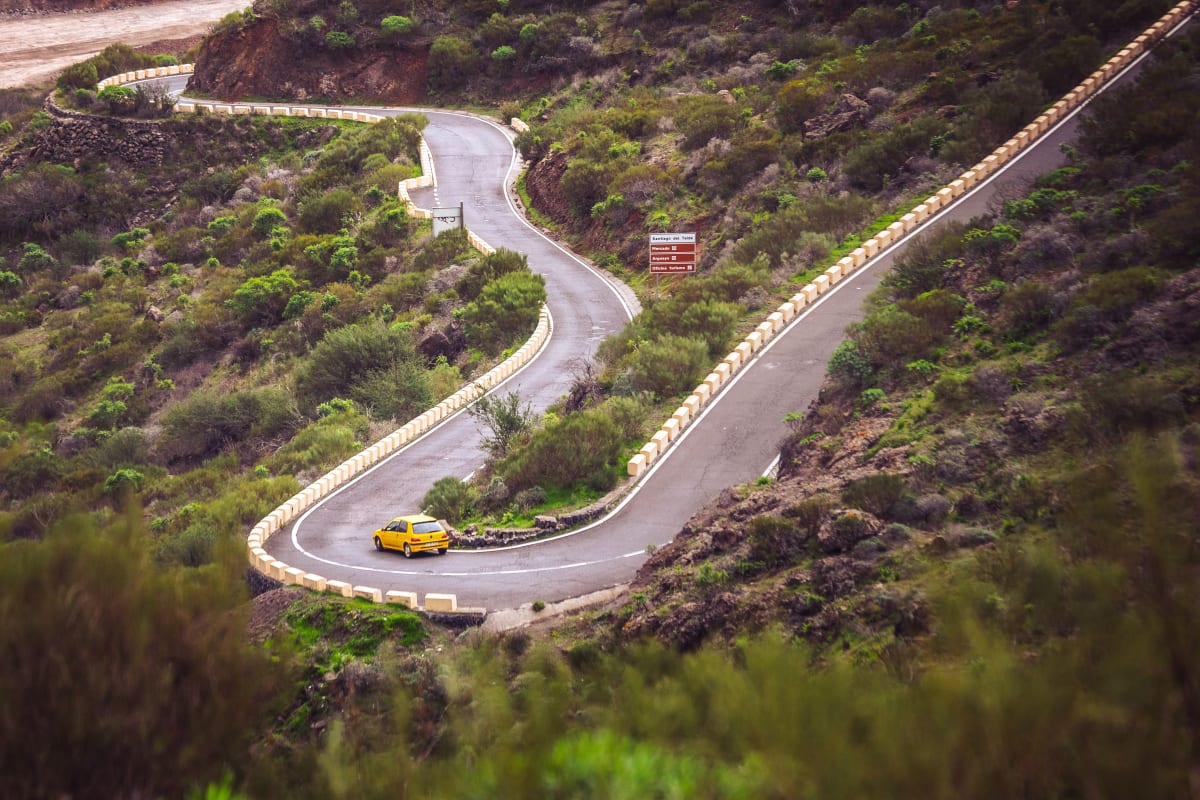
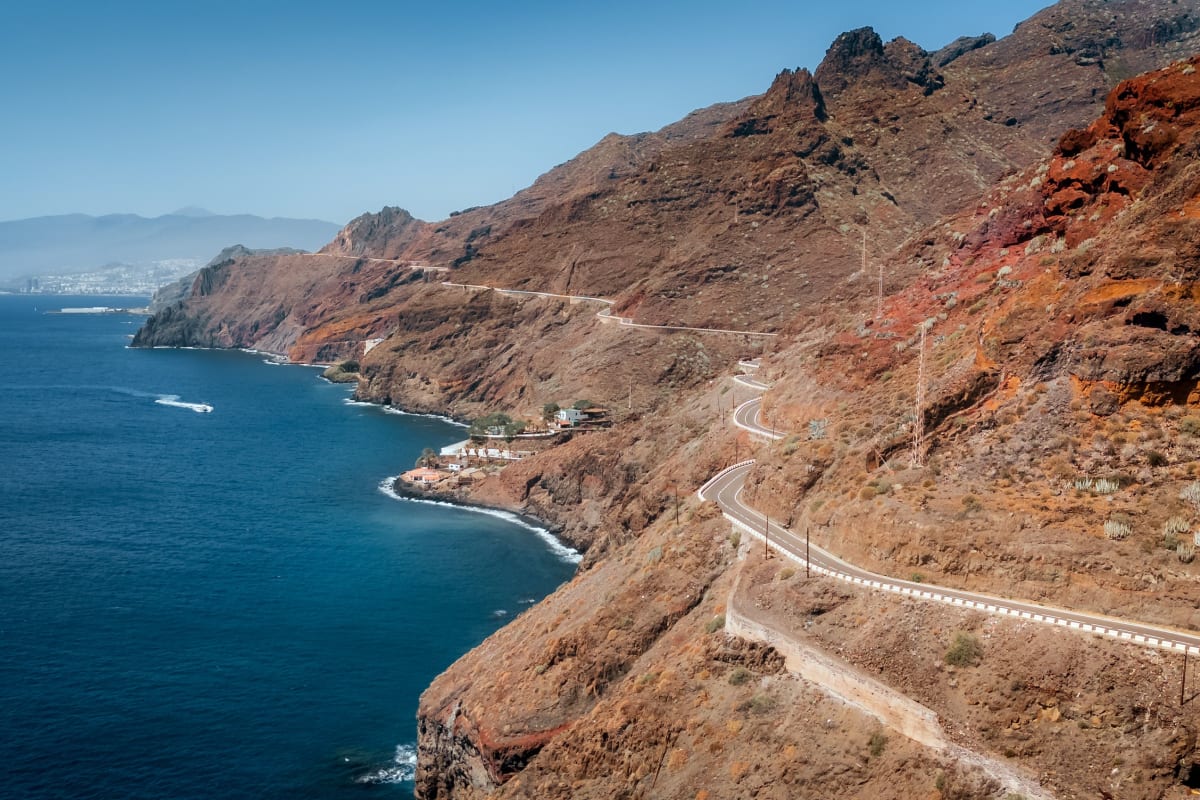
The mountain roads are the reason to have the car and they are not difficult, just slow and continuous. Second gear, no hurry, and pull in to let residents past: they drive these roads daily and they are not sightseeing.
Two specific warnings. The road up to Masca, the TF-436, has been closed to recreational visitor traffic between nine in the morning and four in the afternoon since the summer of 2026, so the village is reached outside those hours or on a guided trip. And cloud on the northern slopes can drop visibility to a few metres in minutes; if it does, put the fog lights on and slow to a crawl rather than stopping on a bend.